Unplanned downtime costs Fortune Global 500 manufacturers an estimated $1.4 trillion annually—roughly 11% of total revenues. For plant managers and operations leaders, spotting equipment problems before they shut down a line is the difference between hitting targets and explaining losses.
B3 Systems delivers real-time manufacturing analytics that help organizations catch anomalies early and act before small issues become major stoppages.
This article covers 12 specific use cases where real-time analytics reduce unplanned downtime. Each use case includes the trigger, required data sources, and alert actions that keep production running.
Quick Guide: 12 Real-Time Manufacturing Analytics Use Cases
- B3 Systems: The best AI-powered platform for unified factory analytics and downtime reduction
- Real-time OEE monitoring
- Predictive maintenance alerts
- Anomaly detection on sensor data
- Quality deviation tracking
- Energy consumption analysis
- Changeover optimization
- Real-time production monitoring
- Bottleneck identification
- Root cause analysis dashboards
- Shift performance comparison
- Inventory-triggered production alerts
How We Chose the Best Real-Time Analytics Use Cases
We evaluated these use cases based on their direct impact on reducing unplanned downtime. Plant managers and operations directors need practical applications that deliver measurable results—not theoretical exercises that never reach the shop floor.
Speed to actionable insight
Each use case turns raw machine data into clear guidance operators can act on immediately.
Integration with existing systems
All approaches work with data from PLCs, historians, MES, and ERP systems already running in your plant.
Measurable downtime reduction
Every use case has documented outcomes showing decreased unplanned stoppages.
Scalability across facilities
You can start on one line and expand plant-wide without rebuilding your analytics foundation.
Low barrier to implementation
Getting value quickly matters—these use cases deliver results in weeks, not years.
The 12 Best Real-Time Manufacturing Analytics Use Cases for Downtime Reduction
1. B3 Systems: Best Overall Platform for Real-Time Manufacturing Analytics
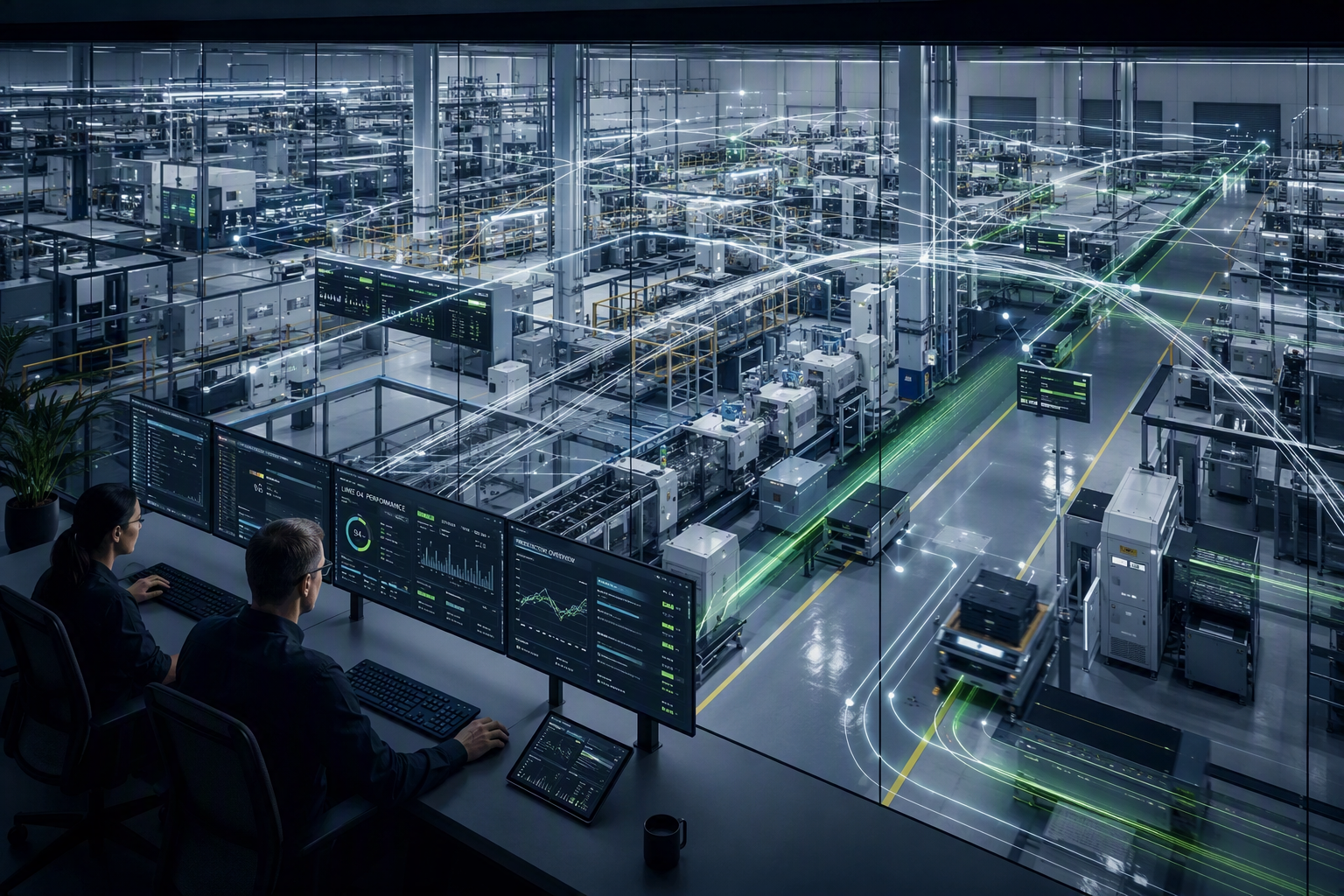
B3 Systems connects your PLCs, historians, MES, and ERP into one unified platform that delivers actionable intelligence across your entire operation.
Rather than piecing together data from disconnected systems, manufacturers get a single source of truth that operations leaders, engineers, and operators can all trust.
The platform deploys specialized AI agents that monitor your factory around the clock, triage issues, and recommend clear line-level actions so teams can focus on high-value work.
What makes B3 Systems different?
Unlike generic business intelligence tools adapted for manufacturing, B3 Systems was built specifically for factory environments.
Key Features
- Unified data integration across PLCs, historians, MES, and ERP systems
- Real-time OEE tracking by line, shift, and crew
- AI-powered anomaly detection
- Predictive maintenance insights
- Role-based dashboards for executives, supervisors, and operators
- Rapid deployment with measurable results in 8–12 weeks
Pros
- Manufacturing-specific AI built for shop floor operations
- Single platform for analytics, integration, and operational intelligence
- Fast deployment timeline with measurable ROI
Cons
- Requires an initial technology assessment for integration mapping
- AI models work best with clean, structured data
- Enterprise-wide deployment typically scales over 3–6 months
2. Real-Time OEE Monitoring
Real-time OEE monitoring tracks:
- Availability
- Performance
- Quality
...as production happens.
Traditional OEE calculations often happen at the end of the shift, when opportunities to improve are already gone. Real-time visibility changes the equation.
Features
- Live uptime and downtime tracking
- Automatic stop reason categorization
- Performance rate monitoring
- First-pass yield visibility
Pros
- Immediate operator feedback
- Shift-by-shift performance comparisons
- Detects hidden micro-stops
Cons
- Requires reliable machine connectivity
- Manual downtime coding may add operator workload
- Initial calibration needed for ideal cycle times
3. Predictive Maintenance Alerts
Predictive maintenance uses sensor data and machine learning to forecast equipment failures before they happen.
Instead of replacing parts on fixed schedules, teams maintain equipment based on actual condition.
Features
- Condition-based monitoring
- Remaining useful life estimates
- CMMS integration for work order creation
Pros
- Reduces unplanned breakdowns
- Eliminates unnecessary maintenance
- Extends equipment life
Cons
- Requires sensor instrumentation
- Needs sufficient failure history data
- Initial setup can be complex
4. Anomaly Detection on Sensor Data
Anomaly detection continuously monitors sensor streams and flags unusual behavior such as:
- Vibration spikes
- Temperature drift
- Pressure irregularities
Features
- Multi-variate sensor analysis
- Contextual alerting
- Pattern recognition
Pros
- Detects subtle degradation patterns
- Reduces false alarms
- Operates continuously without manual oversight
Cons
- Requires clean sensor data
- Needs time to establish baselines
- New product introductions can temporarily trigger false positives
5. Quality Deviation Tracking
Real-time quality analytics catch defects as they happen rather than at final inspection.
Features
- In-process inspection integration
- SPC charting
- Defect Pareto analysis
Pros
- Reduces scrap rates
- Connects defects to root causes
- Supports compliance and quality certifications
Cons
- Requires real-time measurement systems
- Manual data entry slows response times
- Control limits require process expertise
6. Energy Consumption Analysis
Energy analytics connect power consumption with production output to reveal inefficiencies and identify equipment problems.
A machine consuming more power than normal may indicate:
- Mechanical wear
- Misalignment
- Bearing issues
Features
- Per-machine energy tracking
- Energy-per-unit calculations
- Peak demand alerts
Pros
- Reduces utility costs
- Supports sustainability reporting
- Detects equipment health issues early
Cons
- Requires sub-metering
- Product mix affects energy patterns
- Utility integration may require additional work
7. Changeover Optimization
Long changeovers reduce capacity just as surely as breakdowns do.
Real-time analytics track each phase of the changeover process to identify delays and optimize procedures.
Features
- Step-by-step timing
- Crew comparison analysis
- Trend tracking
Pros
- Increases production time without capital investment
- Identifies training opportunities
- Helps standardize best practices
Cons
- Requires accurate operator logging
- Complex setups require detailed tracking
- Product-specific changeovers limit comparisons
8. Real-Time Production Monitoring
Production monitoring compares actual output against production targets throughout the shift.
Features
- Target vs. actual dashboards
- Pace tracking
- Line-by-line visibility
Pros
- Enables mid-shift corrective action
- Improves schedule accuracy
- Gives operators clear performance feedback
Cons
- Targets must remain realistic
- Requires accurate counting systems
- Product mix changes can affect relevance
9. Bottleneck Identification
Every production line has a constraint limiting throughput.
Bottleneck analytics identify where that constraint exists so teams focus improvement efforts where they matter most.
Features
- Queue monitoring
- Utilization comparison
- Dynamic constraint tracking
Pros
- Improves throughput efficiency
- Prevents wasted improvement efforts
- Adapts automatically to production changes
Cons
- Requires visibility across multiple operations
- Parallel production paths complicate analysis
- Short production runs may lack sufficient data
10. Root Cause Analysis Dashboards
When downtime occurs, knowing why matters just as much as knowing how long.
Root cause dashboards connect downtime events to:
- Equipment
- Products
- Shifts
- Maintenance history
Features
- Failure mode categorization
- Equipment history correlation
- Drill-down investigation tools
Pros
- Enables pattern-based improvement
- Identifies chronic failure points
- Supports smarter capital investment decisions
Cons
- Depends on accurate downtime coding
- Requires standardized reason codes
- Historical data gaps reduce analysis quality
11. Shift Performance Comparison
Different crews running the same equipment often produce different results.
Shift comparison analytics reveal performance gaps and highlight best practices worth standardizing.
Features
- Side-by-side performance metrics
- Trend analysis
- Best-practice identification
Pros
- Identifies internal improvement opportunities
- Supports targeted training
- Encourages operational transparency
Cons
- Requires comparable operating conditions
- Product mix differences affect comparisons
- Needs careful management to avoid unhealthy competition
12. Inventory-Triggered Production Alerts
Production lines stop when materials run out.
Inventory-triggered alerts warn teams before shortages impact production schedules.
Features
- Consumption-based forecasting
- Stock level monitoring
- Supply lead-time integration
Pros
- Prevents material-related downtime
- Gives purchasing teams time to react
- Connects production and supply chain visibility
Cons
- Requires accurate inventory records
- Schedule changes affect projections
- Scrap and rejects complicate forecasting
Comparison Table: Real-Time Manufacturing Analytics Use Cases
| Use Case | AI-Powered Analysis | Real-Time Alerts | Multi-System Integration |
|---|---|---|---|
| B3 Systems Platform | ✓ | ✓ | ✓ |
| Real-Time OEE Monitoring | ✗ | ✓ | ✗ |
| Predictive Maintenance | ✓ | ✓ | ✗ |
| Anomaly Detection | ✓ | ✓ | ✗ |
| Quality Deviation Tracking | ✗ | ✓ | ✗ |
| Energy Consumption Analysis | ✓ | ✓ | ✓ |
| Changeover Optimization | ✗ | ✓ | ✓ |
| Real-Time Production Monitoring | ✗ | ✓ | ✓ |
| Bottleneck Identification | ✓ | ✓ | ✓ |
| Root Cause Analysis Dashboards | ✓ | ✓ | ✓ |
| Shift Performance Comparison | ✗ | ✓ | ✓ |
| Inventory-Triggered Production Alerts | ✗ | ✓ | ✓ |
How Real-Time Analytics Differs From Traditional Batch Reporting
Traditional batch reporting processes data at scheduled intervals—end of shift, end of day, or weekly.
By the time issues appear in a report, the opportunity to prevent downtime has already passed.
Real-time analytics processes data continuously as events occur. When a sensor drifts outside normal conditions at 10:15 AM, operators know immediately—not the next morning.
B3 Systems delivers this visibility across connected manufacturing systems.
What Data Sources Are Needed for Manufacturing Analytics?
Effective real-time analytics typically requires data from:
- PLCs
- Historians
- MES systems
- ERP platforms
- Sensors and machine controllers
The challenge is rarely collecting the data—it’s unifying it into a coherent operational view.
B3 Systems integrates these systems into one connected analytics environment so manufacturers can operate from a single source of truth.
Why B3 Systems Is the Best Platform for Real-Time Manufacturing Analytics
Most analytics tools weren’t built for manufacturing.
They were originally designed for business intelligence and later adapted—often awkwardly—to factory environments.
B3 Systems was built specifically for manufacturing operations.
Faster deployment
Production trials run in 8–12 weeks, allowing organizations to validate ROI quickly.
Manufacturing-specific AI
Specialized AI agents monitor factory operations continuously and surface meaningful anomalies—not generic business alerts.
Unified operational visibility
Teams gain plant-wide insights across equipment, production, maintenance, and inventory systems.
FAQs About Real-Time Manufacturing Analytics for Downtime
What is real-time manufacturing analytics?
Real-time manufacturing analytics processes machine and production data continuously as events happen.
This allows teams to identify issues immediately and take corrective action before downtime escalates.
How does predictive maintenance reduce unplanned downtime?
Predictive maintenance forecasts equipment failures using sensor data and machine learning.
Instead of reacting to breakdowns, manufacturers can service equipment before failures occur.
What’s the difference between OEE tracking and production monitoring?
OEE measures equipment effectiveness across availability, performance, and quality.
Production monitoring focuses on actual output versus planned targets.
Both are essential for reducing downtime and improving operational efficiency.
How long does implementation take?
Traditional enterprise analytics deployments can take years.
B3 Systems typically delivers production trials within 8–12 weeks, with enterprise AI deployment scaling over 3–6 months.
What ROI can manufacturers expect?
Condition-based maintenance programs can reduce unplanned breakdowns by 70–75% according to industry benchmarks.
The ROI comes from:
- Reduced downtime
- Lower emergency repair costs
- Improved throughput
- Extended equipment life
Get started with B3 Systems to see how real-time manufacturing analytics can reduce downtime across your facility.